The relationship between what fans say online and what bookmakers do with their odds is considerably less straightforward than most bettors assume, and understanding the nuances of that relationship can meaningfully improve how you interpret and respond to market movements. On one hand, public sentiment influences money flows into betting markets, and money flows influence where lines are set. On the other hand, sharp money from professional betting operations frequently moves lines in the opposite direction to public sentiment. If you enjoy the community and conversation aspects of sports culture as much as the betting itself, Arena Plus bingo and other social gaming formats offer a more communal kind of entertainment that captures some of that shared experience in a genuinely enjoyable context.
Bookmakers themselves are not passive observers of social media noise. They actively model how recreational bettors respond to media narratives and adjust their opening prices to account for predictable public behaviour. Understanding how this dynamic plays out in practice gives you a meaningful edge in interpreting line movements and deciding when to act on them.
Volume, Sentiment, and Betting Flow Are Three Separate Things
Understanding how social media interacts with betting markets requires carefully separating three distinct concepts that are often conflated. Raw social media volume refers to the total amount of conversation about a team, player, or match, regardless of the tone. Sentiment refers to whether that conversation is predominantly positive or negative in character. Actual betting volume refers to the real money being placed on specific outcomes, which is the only thing that directly and mechanically moves a betting line.
These three measures correlate imperfectly and sometimes barely at all. An enormous volume of social media conversation about a team that is roughly evenly split between positive and negative sentiment will produce minimal net directional pressure on the betting market. Moderate volume of genuinely one-directional sentiment from bettors who are actively engaged in wagering can produce significant line movement. The distinction matters because tracking social media volume or sentiment without translating it into an estimate of actual betting flow is of limited practical value.
Why the Biggest Clubs Are Largely Immune to Distortion
Raw social media volume is an extremely unreliable predictor of market distortion for the biggest and most prominent clubs in any league. Liverpool and Manchester City matches generate enormous amounts of social media activity, but the market prices those matches with exceptional precision because the volume of sophisticated sharp money betting these games is also enormous. The two forces, public noise and sharp correction, effectively cancel each other out in the most prominent matches.
The structural dynamic that makes social media influence on these markets negligible is that for every retail bettor reacting emotionally to a viral story about a key player’s supposed form collapse, there are professional operations with better information reaching the opposite conclusion and placing significantly larger bets on it. The market corrects quickly and decisively in the biggest and most liquid markets.
Where Social Noise Creates Real and Exploitable Distortions
Where social media sentiment does appear to create genuine and exploitable market distortions is in specific and relatively narrow situations. Smaller and less prominent clubs where the ratio of informed sharp money to uninformed public money is lower. Specific injury news that breaks on social media before it has been officially confirmed and before the market has fully adjusted. Managerial controversies or squad unrest stories that generate unusually heavy and predominantly one-directional social media traffic from supporters who convert their emotional reaction into betting activity.
Bettors who develop the habit of asking whether any given piece of social media information constitutes genuinely new information that should change the underlying probability estimate, or simply louder repetition of something the market already knows, are better equipped to distinguish between situations where the line has moved for valid reasons and situations where it has moved primarily in response to noise. A controversy that has been building for six weeks is almost certainly already priced in. One that broke in the last two hours may not yet be, and that difference represents the genuine opportunity.
What fans are reading
Popular stories published in the past 48 hours.

Football matches live on TV this week
Read the story →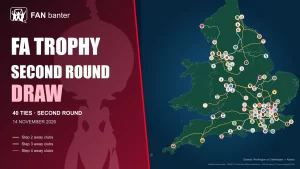
FA Trophy second-round draw: all 40 ties, away journeys and matches to watch
Read the story →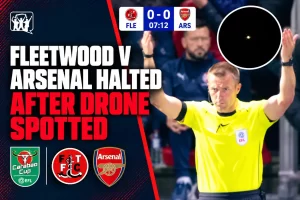
Drone stops Fleetwood Town vs Arsenal Carabao Cup tie at Highbury
Read the story →
Next Sheffield Wednesday manager odds: contenders to replace Henrik Pedersen
Read the story →





You must be logged in to post a comment Login