Tournament Upsets That Changed Football Forever
Every now and then, footy throws up a result that looks stuffed on paper. Some no-name side knocks off a heavyweight. A rabble that scraped through qualifying ends up in the final. The big guns pack their bags early, and everyone’s left scratching their heads: how the hell did that happen? These boilovers aren’t just pub trivia. They flip how the sport gets played, coached, and bankrolled. Here’s a few that tore up the script.
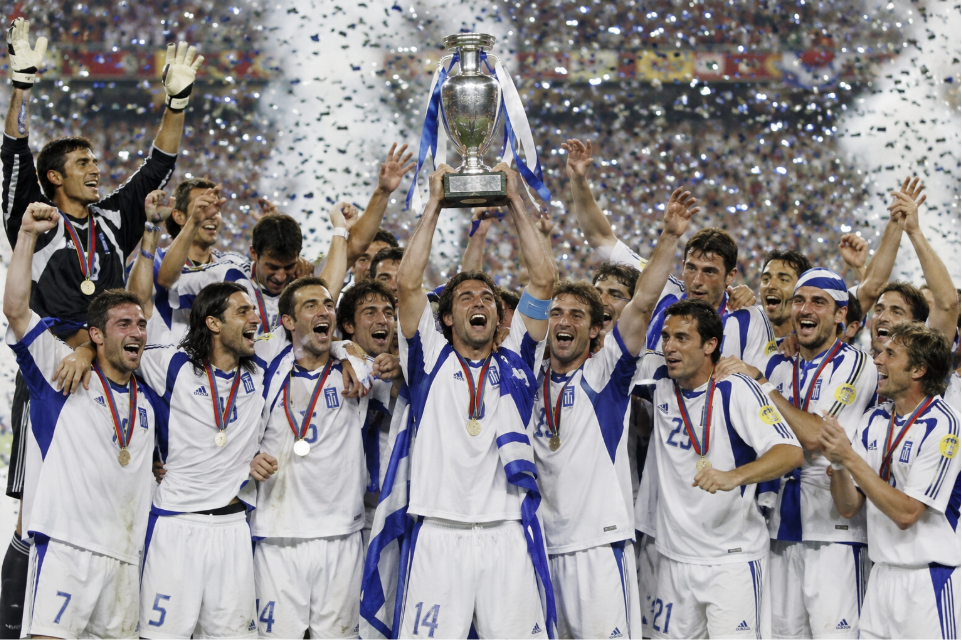
Greece 2004 – The Blueprint for Defensive Organisation
No one picked this. Greece hadn’t won a single game at a big tournament before Euro 2004. Their boss, Otto Rehhagel, cooked up a system so tight and drilled that it suffocated every attacking side they met. Portugal, France, Czech Republic — all sent packing. Greece nicked the final 1-0 with a header off a dead ball. The footy world was filthy. Defensive football had won.
But here’s what changed afterwards. Smaller nations stopped trying to play open, attacking football against bigger teams. They sat deep, stayed organised, and hoped for a set piece or a counter. The Greek model spread across Eastern Europe, Scandinavia, and Africa. It worked often enough that big teams had to figure out how to break down packed defences. That tactical arms race is still playing out today.
Pattern Changes Happen in Other Games Too
A service like Royal Reels noticed similar behaviour changes. Operators saw that players who lost on high-volatility games often switched to low-risk options. Online casino Australia platforms expanded their libraries to include both styles because one size clearly doesn’t fit everyone.
Casino online rooms offer tables with different limits for the same reason. An upset in one category sends punters looking for safety in another. Deposit minimums vary across platforms, with some accepting as little as five dollars for a quick session on Royal Reels game.
Welcome bonuses often match the first deposit up to a certain amount, giving new users extra play without additional risk. Withdrawal processing times differ as well — e-wallets clear within hours, while bank transfers take a couple of days to hit a player’s account.
Iceland 2016 – When a Nation of 330,000 Stunned England
Iceland’s population is smaller than Leicester’s. Yet at Euro 2016, they knocked out England in the round of sixteen. Not on penalties. Not through a fluke. They outplayed a team with ten times their resources. The aftermath was brutal for English football — another tournament exit, another inquest, another reset.
For Iceland, the upset changed everything. Kids who watched that match are now coming through academy systems across the country. Investment in coaching infrastructure tripled. The national team became a legitimate brand, attracting sponsorship and friendly matches against top sides. Winning changed their football economy forever.
What can smaller nations learn from Iceland’s example?
- Coach education matters more than population – Iceland put UEFA-licensed coaches in every age group, from under-8s upwards. Most big nations still rely on parent volunteers at grassroots level.
- Indoor facilities extend the training year – Iceland built heated pitches so kids could train through winter. Without that, their technical development would have stalled.
- A clear playing identity beats tactical confusion – Iceland knew exactly what they were: organised, physical, dangerous from set pieces. No identity crisis meant no mixed messages on match day.
These lessons have been copied by nations like Finland, Georgia, and North Macedonia. None have repeated Iceland’s exact success, but several have qualified for tournaments since. The upset created a template.
Leicester City 2016 – The Premier League’s Greatest Shock
No upset conversation skips Leicester. A 5000-1 raffle ticket. A mob that nearly fell out of the league the year before. A striker, Jamie Vardy, who was kicking around non-league five years earlier. They walked the Premier League by ten points. It broke footy’s brain for a fair while.
The long-term fallout is still obvious. Scouting crews now poke around outside the usual spots — lower divisions, overseas markets, cast-off academy kids. The wage bill myth got shattered: Leicester spent way less than their rivals but still won. Agents started asking for different contract setups, with bonuses tied to performance instead of flat fees. The boilover changed how clubs think about bang for buck.
Where the Next Big Upset Will Come From
History repeats in its own way. Every decade serves up one or two genuine boilovers. The 1990s gave us Denmark winning Euro 92 without even qualifying. The 2000s brought Greece and Porto’s Champions League fairy tale. The 2010s delivered Leicester and Iceland. The 2020s are bloody overdue.
So who fits the bill? A few contenders stick out:
- A club from a second-tier European league – Sides from Belgium, the Netherlands, or Portugal have made European finals before. One could pinch the whole thing soon.
- An African nation at the World Cup – Morocco crashed the semis in 2022. Senegal, Ghana, or Nigeria could go deeper with a kind draw and a sprinkle of luck.
- A lower-profile women’s team – The women’s game has fewer cash gaps. A shock winner at the World Cup or Euros is far more likely than in the men’s version.
The common thread? Organisation, belief, and a bit of fortune. The same ingredients that powered every upset before them.









You must be logged in to post a comment Login