Compiling the definitive 26-man roster necessitates strict compliance with FIFA submission embargoes. Tactical polyvalence dictates personnel choices, equilibrating defensive resoluteness with offensive celerity. For punters evaluating Betting in Ethiopia markets, decoding these squad dynamics yields a quantitative edge when prognosticating group stage trajectories.
South Africa at the 2026 FIFA World Cup
Bafana Bafana secured their fourth overall World Cup appearance, ending a prolonged 24-year qualification absence since 2002. The newly expanded 48-team format drastically alters group stage mathematics, requiring optimal point accumulation across three fixtures to survive the initial phase and leverage their trademark defensive resilience.
South Africa’s Qualification Campaign
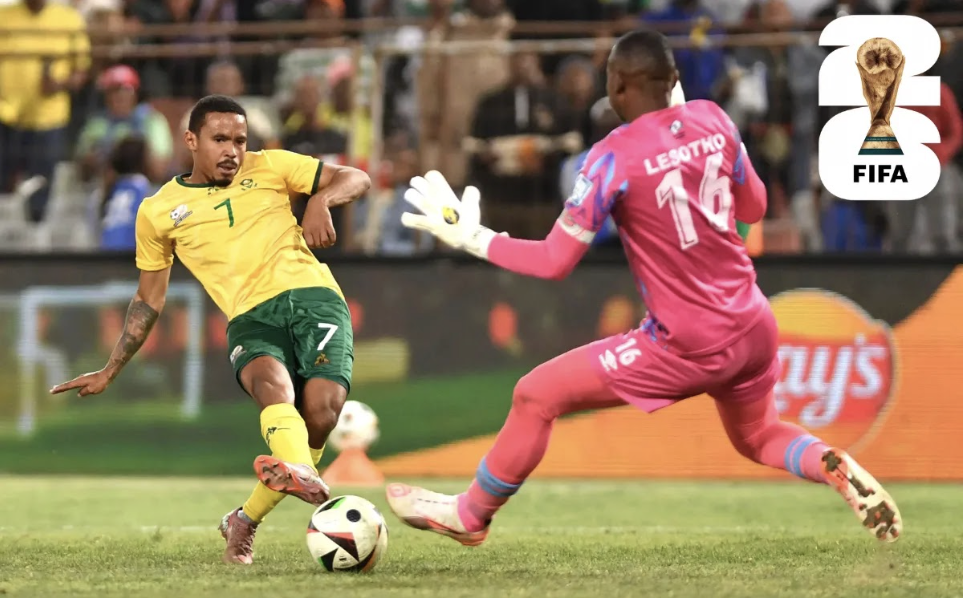
Navigating a highly competitive CAF Group C, the national team dominated a grueling 10-match itinerary to claim top spot. Accumulating 23 points while conceding merely four goals, they bypassed the intercontinental playoff route entirely, outlasting regional rivals like Burkina Faso to secure automatic World Cup allocation.
Expectations for Bafana Bafana in 2026
Analytical projections for the squad outline specific operational benchmarks required to navigate the tournament group phase successfully:
-
Securing at least 4 points across three group fixtures to ensure progression.
-
Maintaining a sub-1.0 expected goals against (xGA) metric via disciplined low-block integrity.
-
Targeting a 15% conversion rate from dead-ball situations to offset possession deficits.
-
Executing high-velocity counter-attacks within 12 seconds of turnover to exploit high lines.
South Africa 2026 FIFA World Cup Squad List
Constructing the final tournament roster demands equilibrating veteran stewardship with raw domestic prospects. Management recently submitted the definitive 26-man registry to FIFA, cementing a highly rigid tactical blueprint. Punters evaluating toto15 predictions must carefully scrutinize these positional allocations to forecast group stage outcomes accurately.
Goalkeepers in the South Africa Squad
Shot-stopping forms the foundation. The custodial unit relies heavily on continental pedigree and commanding aerial dominance to neutralize set-piece threats during the tournament.
-
Ronwen Williams – Captain and primary shot-stopper.
-
Bruce Bvuma – Experienced domestic league veteran.
-
Brandon Peterson – Emerging talent providing depth.
Defenders Selected for South Africa
Defensive structural integrity hinges on a hybrid backline. These players merge physical interception metrics with rapid outward ball progression.
-
Mosa Lebusa – Central defensive anchor.
-
Rushine De Reuck – Ball-playing center-back.
-
Thabo Moloisane – Dynamic right-back.
-
Sibongiseni Mthembu – Attack-minded left-back.
-
Innocent Maela – Versatile central defensive cover.
-
Tapelo Xoki – Physical defensive presence.
Midfielders in the FIFA World Cup Squad
Central operators dictate the transitional tempo. They utilize high-press resistance to bypass opposing midfield blocks and initiate counter-attacking sequences.
-
Teboho Mokoena – Deep-lying playmaker and defensive shield.
-
Jayden Adams – Box-to-box engine.
-
Njabulo Blom – Tactical midfield orchestrator.
-
Thapelo Morena – Versatile wide midfielder.
-
Relebohile Mofoken – Creative midfield playmaker.
-
Andile Mbokoma – Ball-carrying specialist.
South Africa Forwards and Attacking Players
The vanguard unit prioritizes explosive acceleration. Attackers focus on clinical finishing in isolated one-on-one scenarios to exploit high defensive lines.
-
Percy Tau – Primary creative catalyst.
-
Evidence Makgopa – Target forward and aerial threat.
-
Elias Pelembe – Pace-driven wide attacker.
-
Rivaldo Coetzee – Clinical finisher.
-
Iqraam Rayners – Experienced attacking support.
-
Oswin Appollis – Emerging goal-scoring talent.
Key Players in the South Africa 2026 Squad
Identifying pivotal personnel requires analyzing match-winning metrics and tactical indispensability. The coaching staff relies on a core nucleus of battle-tested veterans and explosive youth to navigate the World Cup group stages. These individuals dictate tempo, absorb pressure, and execute high-leverage transitional sequences.
Percy Tau as South Africa’s Main Star
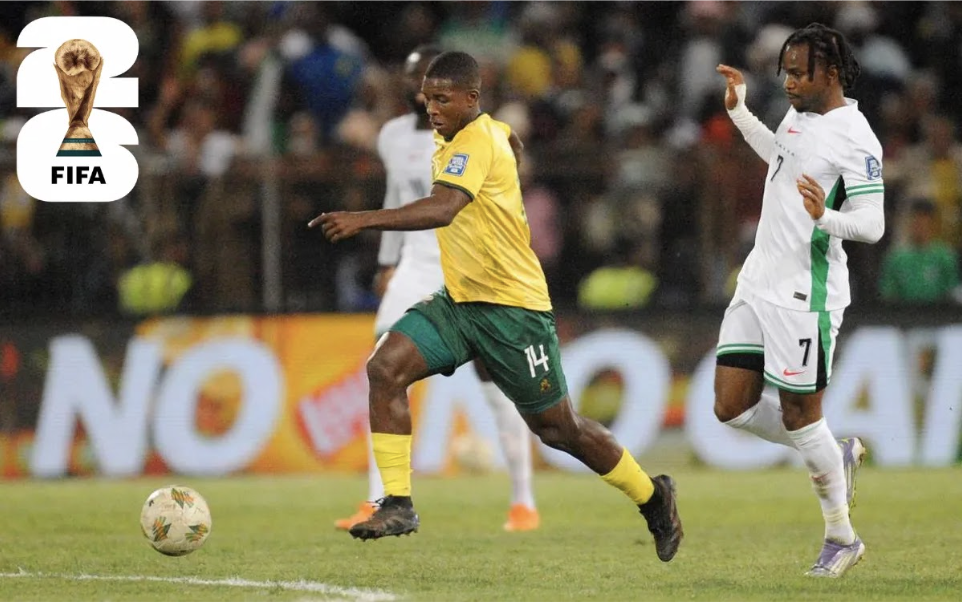
Operating as the primary offensive fulcrum, Tau possesses elite dribbling cadence and spatial awareness. His ability to fracture compact defensive blocks through isolated one-on-one engagements remains the squad’s most potent weapon. Defending teams must allocate double-teams, creating vital spatial vacuums for supporting attackers during the tournament.
Young Talents to Watch in the Team
Emerging prospects inject necessary kinetic energy and unpredictability into the tactical framework. These developing athletes provide crucial depth while offering high-ceiling upside for future continental dominance:
-
Relebohile Mofoken – Creative midfield orchestrator with elite vision.
-
Jayden Adams – High-motor box-to-box engine.
-
Oswin Appollis – Rapid wide attacker.
-
Brandon Peterson – Agile shot-stopper commanding the penalty area.
Experienced Leaders in the Squad
Veteran stewardship anchors the dressing room and stabilizes on-pitch decision-making during high-pressure World Cup fixtures. These seasoned professionals provide tactical discipline and emotional regulation when the squad faces adversity:
-
Ronwen Williams – Commanding captain and primary shot-stopper.
-
Mosa Lebusa – Resolute central defensive organizer.
-
Njabulo Blom – Tactical midfield orchestrator.
-
Thapelo Morena – Versatile and battle-tested wide operator.
South Africa Tactical Setup and Possible Lineup
The technical staff constructs a rigid defensive architecture emphasizing rapid vertical transitions for the South Africa 2026 FIFA World Cup. This systematic approach maximizes counter-attacking efficiency while maintaining structural discipline. Many fans balance match analysis with premium entertainment through a pg soft official partner, enjoying high-quality mobile-first casino content.
Preferred Formation and Playing Style
The national team predominantly operates within a fluid 4-2-3-1 framework, balancing midfield compactness with explosive wide play. This tactical configuration establishes clear operational parameters across different match phases:
South Africa’s Strongest Starting XI
Selecting the optimal starting eleven requires identifying personnel who excel within the high-intensity transitional system deployed for major international competitions:
-
Ronwen Williams (Goalkeeper)
-
Thabo Moloisane (Right-Back)
-
Mosa Lebusa (Center-Back)
-
Rushine De Reuck (Center-Back)
-
Sibongiseni Mthembu (Left-Back)
-
Teboho Mokoena (Defensive Midfielder)
-
Njabulo Blom (Central Midfielder)
-
Relebohile Mofoken (Attacking Midfielder)
-
Percy Tau (Right Winger)
-
Elias Pelembe (Left Winger)
-
Evidence Makgopa (Striker)
South Africa’s Chances at the 2026 FIFA World Cup
Evaluating Bafana Bafana’s tournament prospects requires analyzing their structural resilience and transitional lethality. The expanded 48-team format introduces additional advancement pathways through best third-place finishes, significantly boosting progression probabilities for the World Cup. Analytical models assign a moderate success coefficient, heavily dependent on defensive solidity and clinical set-piece execution during the group phase.
Main Strengths of the Team
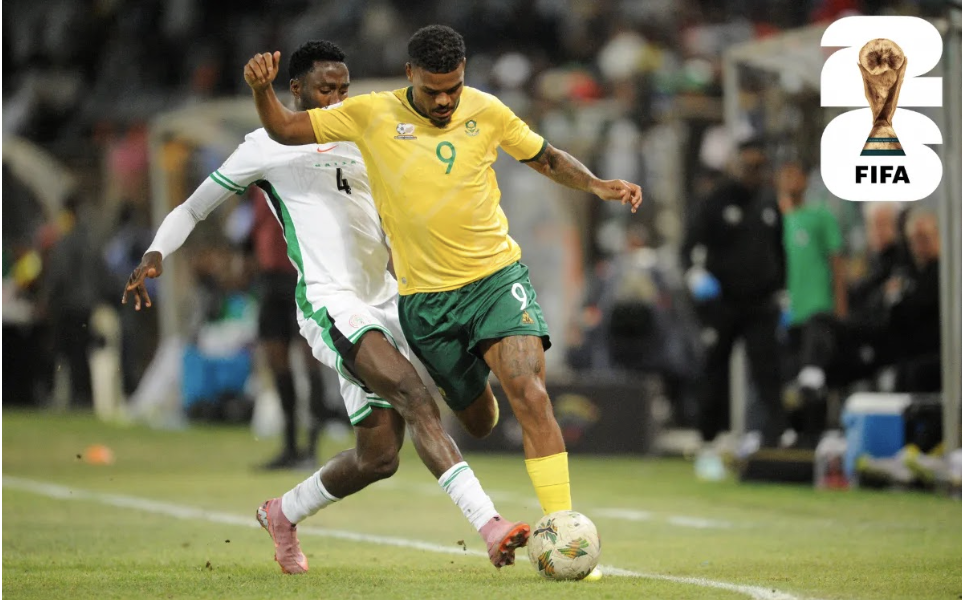
The squad possesses distinct competitive advantages rooted in physical conditioning and tactical cohesion. These core competencies form the foundation of their international strategy for the tournament:
Biggest Challenges for South Africa
Despite tactical discipline, several structural vulnerabilities could hinder tournament progression. Opponents will actively target these specific operational deficiencies:
-
Struggling to break elite high presses, resulting in dangerous defensive turnovers.
-
Shallow central midfield depth, triggering late-game fatigue during intense phases.
-
Susceptibility to rapid diagonal switches, leaving advanced full-backs exposed.
-
Blunt open-play finishing, forcing an over-reliance on set-piece routines.
Can South Africa Reach the Knockout Stage?
Progression remains mathematically plausible but statistically demanding. Securing 4 points typically guarantees advancement in the newly expanded 48-team World Cup format, either through a top-two finish or as one of the best third-placed teams. Achieving this threshold requires neutralizing top-tier opposition in the opening fixture and maximizing point yields against lower-seeded teams through disciplined, low-block defensive executions.








You must be logged in to post a comment Login