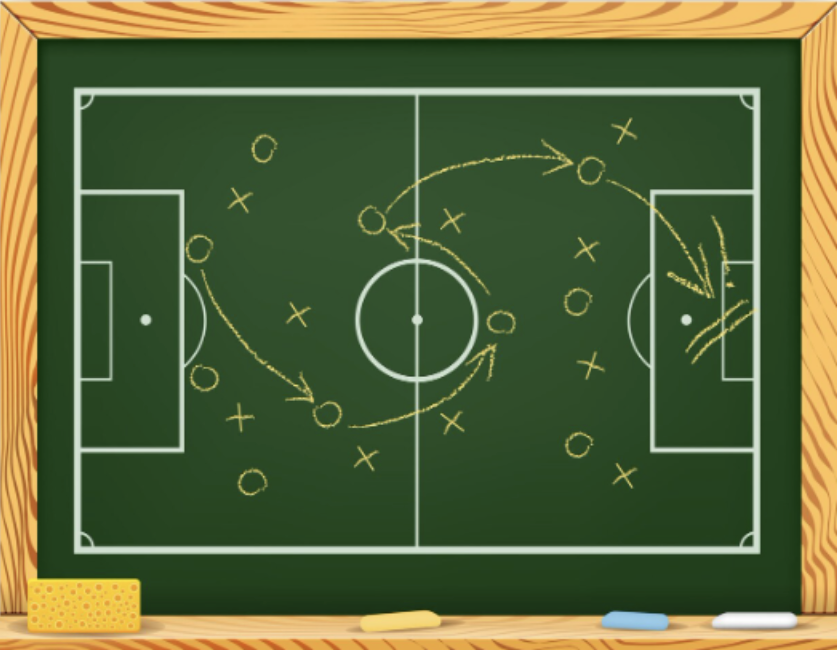
For decades, football was defined by rigid formations and traditional player roles. The classic 4-4-2 system dictated a clear division of labor: defenders defended, midfielders controlled the center, and strikers waited for the ball in the penalty box. However, as we progress deeper into the 2020s, that static approach has been completely dismantled. Modern football is a highly fluid, intellectually demanding, and relentlessly fast-paced game.
Today’s elite managers are no longer just motivators; they are tactical innovators who treat the pitch like a massive chessboard. The evolution of sports science and data analytics has allowed teams to play with a level of intensity and spatial coordination that was physically impossible a generation ago. To understand what dictates success in the modern era, we must explore the specific tactical shifts that have redefined how the beautiful game is played.
The Key Tactical Trends of the Modern Era
The contemporary football landscape is dominated by a few core philosophies that focus on controlling space, manipulating the opponent’s defensive structure, and dominating possession.
The defining tactical trends of today include:
- Gegenpressing (Counter-Pressing): Popularized by German managers, this tactic requires a team to immediately and aggressively press the opponent the second possession is lost. The goal is to win the ball back high up the pitch before the opponent can transition into an organized attack.
- Inverted Full-Backs: Traditional full-backs used to hug the touchline. Today, managers instruct them to drift into central midfield when in possession. This creates numerical overloads in the center of the pitch, stifling opposition counter-attacks and aiding in ball retention.
- The Sweeper-Keeper: The goalkeeper is now the first attacker. Expected to possess the passing range of a midfielder, modern keepers play highly advanced positions, allowing the defensive line to push up and compress the playing area.
- Fluidity and the “False Nine”: The traditional, static target man has largely been replaced by highly mobile attackers who drop deep into midfield. This pulls opposing center-backs out of position and creates exploitable gaps for wingers to attack.
This intricate tactical evolution has completely transformed how audiences consume the sport. Modern fans no longer just watch for goals; they analyze formations, pressing triggers, and spatial dominance. This deep analytical engagement naturally extends into how supporters interact with the game on a predictive level. For highly educated fans who want to test their tactical acumen against real-world probabilities, participating in soccer betting offers a way to apply this deep knowledge. By analyzing team setups, historical head-to-head data, and managerial strategies, fans turn passive viewing into a highly interactive, strategic challenge. It proves that the modern viewer is just as invested in the underlying mathematics and tactics as the coaching staff on the touchline.
The Physical Demands of Modern Systems
These advanced tactical frameworks would be useless without the athletes capable of executing them. The modern tactical revolution is deeply intertwined with advancements in sports science. High-pressing systems require extreme cardiovascular endurance and rapid recovery times.
Players are now monitored with GPS trackers and biometric sensors during training and matches. This data ensures that athletes are operating at peak efficiency, capable of making repeated high-intensity sprints in the 90th minute. Tactical versatility is also paramount. A modern player must be “positionless,” possessing the technical ability to defend, pass under pressure, and attack seamlessly. This requirement has effectively killed the “luxury player” who only contributes in the attacking phase, as modern systems require all eleven players to function as a cohesive, hard-working unit.
Conclusion: An Ever-Evolving Chess Match
The tactical evolution of football is a continuous, fascinating cycle. Every time a dominant system emerges, a rival manager inevitably designs a counter-tactic to dismantle it. From the tiki-taka dominance of the late 2000s to the heavy-metal gegenpressing of today, the sport refuses to stand still.
As data analytics become even more sophisticated and athletic conditioning reaches new heights, the tactical complexity of football will only increase. What remains constant, however, is the sheer beauty of the sport. Whether orchestrated through a meticulously planned sequence of thirty passes or a lightning-fast five-second counter-attack, modern football continues to captivate global audiences by balancing raw physical athleticism with brilliant, calculated strategy.










You must be logged in to post a comment Login