The biggest football controversies of the first half of 2026
By 17 June 2026, football’s argument list already had a Premier League legal ruling, two VAR flashpoints, a Champions League exit full of red cards, and a World Cup consumed by visas, tickets, and heat. The first half of the year did not produce a single clean scandal; it produced a file of decisions tied to a match, a rulebook, or a balance sheet. Fan anger moved from London Stadium to Munich, then across Toronto and Miami as the 48-team World Cup opened. The ball kept rolling. The paperwork did too.
Four minutes that shook the two ends of the table
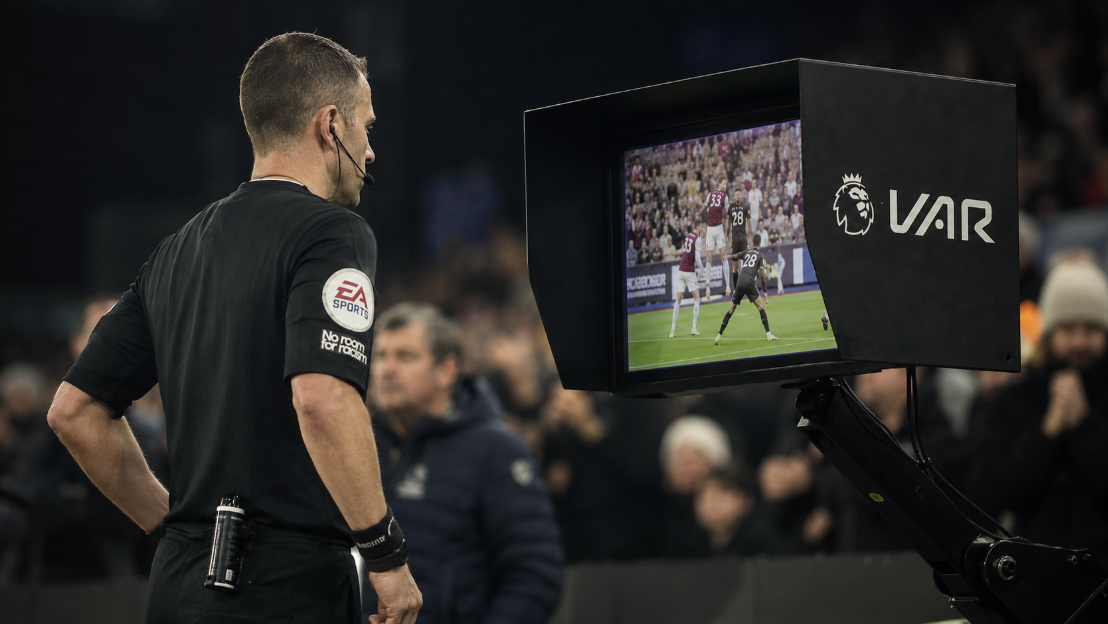
West Ham’s 0-1 defeat to Arsenal on 10 May became the Premier League’s cleanest example of a correct decision that still left the room split. Callum Wilson believed he had grabbed a 95th-minute equalizer from a late corner, but VAR Darren England spotted contact on David Raya and advised Chris Kavanagh to review it on the monitor. By the time the foul was given, four minutes and 17 seconds had passed since the ball crossed the line, and Kavanagh had looked at 17 different replays. West Ham were already preparing to raise concerns with PGMOL. Arsenal had defended resolutely for 94 minutes, yet the moment everyone remembered was the long pause, with players waiting around as the match’s outcome hung in the balance on a screen.
A shoulder, a flag, and Burnley’s old wound
Burnley had already carried a grievance from 28 February, when Brentford led 3-0 inside 34 minutes at Turf Moor before Scott Parker’s side dragged the match back to 3-3. Jaidon Anthony then appeared to complete the comeback, but VAR cut the goal for a shoulder-width offside, and Parker called the decision an injustice. That sense of accounting returned on 10 June, when Burnley won nearly £40m in compensation from Everton over PSR breaches linked to the 2021-22 relegation fight. Everton finished four points above Burnley that season, later had a 10-point deduction reduced to six on appeal, and has appealed the ruling, leaving the Premier League with a courtroom table beside the real one.
City’s silence had its own noise
Manchester City’s case stayed unresolved into June, which made the absence of a verdict a controversy by itself. The club was charged in 2023 with alleged Premier League financial breaches across 2009 to 2018, and Sky Sports reported on 5 June that the 115-charge shorthand may sit closer to 130 separate alleged breaches, all denied by the club. Betting markets do not price silence neatly; title odds, managerial transitions, and outright markets all react differently when punishment ranges from a fine to points deductions. For bettors tracking line movement, squad news, and settlement rules during a regulatory case, MelBet (Arabic: مل بت) works as a single sports-betting screen for live odds, pre-match markets, and statistics without separating the controversy from the fixture list. The useful habit is simple: check confirmed information first, avoid chasing rumors on social feeds, and treat every ante-post slip as exposed to governance risk.
Madrid left Munich with red cards and receipts
Bayern Munich’s Champions League quarterfinal against Real Madrid on 15 April gave the spring its most familiar European argument: a big tie, one late card, and a referee swallowed by the noise. Harry Kane scored his 12th Champions League goal of the season, Vinicius Jr supplied Kylian Mbappe in the 42nd minute, and the tie stayed alive until Eduardo Camavinga received a second yellow in the 86th minute for a foul on Kane. Madrid’s anger sharpened after the whistle, when Arda Guler saw red for confronting Slavko Vincic. Bayern advanced 4-3 on aggregate, yet the last scene felt less about box midfield rotations or Madrid’s left-side overloads than the old Champions League habit of turning one whistle into a week-long trial.
The World Cup queue became a courtroom
The World Cup found itself at the center of debate even before several nations had taken their second corner kick of the group stage. Ghana midfielder Thomas Partey was prevented from entering Canada for the Group L match against Panama in Toronto, had an urgent appeal denied on 16 June, and was only able to return to Ghana’s squad for subsequent fixtures in Boston and Philadelphia after obtaining a U.S. visa. Fans tracking odds, fixtures, and betting markets while away from home may opt to download MelBet (Arabic: تنزيل ميل بيت), allowing them to review official team updates, follow market movements, and access live betting information rather than depending on rumors circulating online or in the stands.
Three-minute pauses changed the match clock
FIFA’s mandatory hydration breaks became another talking point. Every World Cup match stopped around the 22nd minute of each half for three minutes, regardless of the weather, the stadium setup, or the kickoff time. Players such as Virgil van Dijk and Youri Tielemans wondered whether the breaks disrupted the flow of games, while coach Rudi Garcia saw them as a useful chance to get messages across to his team. One moment from Germany’s 7-1 win over Curaçao stood out: Livano Comenencia scored an equalizer in the 21st minute, the break followed almost right away, and Julian Nagelsmann was able to reorganize his side’s pressing and positioning. By mid-June, football still felt like football, but the game now had another timer built into it.







You must be logged in to post a comment Login