Walk into any online casino and the slot machine section is almost certainly the largest part of the library. Hundreds of titles, often thousands, spanning every theme, format, and aesthetic imaginable. Choosing between them is difficult enough. Understanding what distinguishes one from another — beyond the graphics and the soundtrack — requires familiarity with a small set of technical concepts that the industry uses to describe how games behave.
Those concepts are not complicated, but they are frequently misunderstood or inadequately explained. From RTP and volatility to bonus mechanics — sometimes even tied to promotions like those Revery Play offers — these elements shape how a game actually performs over time. This guide covers the terms that actually matter: what they mean, how they interact, and how understanding them changes the way a thoughtful player approaches slot gaming.

RTP: The Number That Tells You the Long-Term Cost
RTP stands for Return to Player, and it is expressed as a percentage. A slot with an RTP of 96% will, over a statistically significant number of spins, return £96 for every £100 wagered. The remaining £4 is the house edge — the mathematical advantage built into the game that ensures the operator generates revenue over time.
Several things about RTP are worth understanding clearly. First, it is a long-run average calculated across millions of spins, not a guarantee about any individual session. In a single session of a hundred spins, outcomes will vary dramatically from the theoretical average. You may win significantly more than the RTP would suggest, or significantly less. The 96% figure describes what happens at scale, not what will happen to you today.
Second, RTP varies meaningfully between games. Most regulated online slots sit between 94% and 97%, but the range extends in both directions. Games with RTPs below 93% represent a meaningfully higher long-term cost to the player. Checking the RTP before playing — typically available in the game’s information section — is a straightforward due diligence step that takes thirty seconds and provides genuinely useful information.
Third, some games offer variable RTP depending on bet size or bonus features activated. Reading the paytable carefully clarifies whether the advertised RTP applies uniformly or only under specific conditions.
Volatility: The Rhythm of the Game
If RTP describes how much a slot returns over time, volatility describes how it distributes those returns. This is arguably the more practically important concept for session-by-session play.
A low-volatility slot pays out frequently but in smaller amounts. The experience is relatively smooth — wins arrive regularly, the balance fluctuates but rarely collapses dramatically, and sessions tend to last longer on a given budget. The trade-off is that individual wins are modest and the possibility of a life-changing jackpot is typically absent.
A high-volatility slot pays out infrequently but with the potential for significant wins when it does. Sessions can involve extended dry runs — many consecutive spins without a meaningful return — followed by a single large payout. The emotional experience is more extreme: the tension of a cold streak, the impact of a big hit. Budget management matters more here, because a run of bad variance can exhaust a session’s funds before the high-end wins that characterise the game type arrive.
Medium volatility sits between the two, combining moderate frequency with moderate win sizes. It is the most common volatility profile across the industry precisely because it suits the broadest range of playing preferences.
Matching volatility to your own playing style and budget is more important than most players realise. A player with a limited session budget who chooses a high-volatility slot may find their funds depleted before the game’s high-end potential has any opportunity to materialise.
Paylines and Ways to Win
Traditional slots used fixed paylines — specific lines across the reels along which matching symbols needed to appear for a win to register. A classic three-reel, five-payline machine required symbols to align along one of those five predetermined paths. Modern slots have moved significantly beyond this format.
Many contemporary games use “ways to win” systems — 243 ways, 1,024 ways, or more — where wins are awarded for matching symbols appearing on adjacent reels regardless of their specific position within those reels. Others use cluster pays, where wins are awarded for groups of matching symbols touching horizontally or vertically. Understanding which system a game uses matters for interpreting the paytable and setting appropriate win expectations.
Bonus Features: Where Most of the RTP Lives
In modern video slots, a substantial proportion of the theoretical RTP is typically concentrated in the bonus features — free spins rounds, multiplier mechanics, pick-and-win games, and progressive jackpot contributions. The base game is often designed to sustain engagement and manage bankroll, while the features are where the game’s most significant win potential resides.
This has practical implications. Games with feature-rich designs reward patience and budget management — surviving long enough in the base game to trigger the bonus is where the variance of the game’s design becomes meaningful. Understanding what triggers the bonus, how frequently it statistically appears, and what its average contribution to overall RTP is will be documented in the paytable for any regulated game.
Putting It Together: A Practical Approach
For players who want to approach slot gaming thoughtfully rather than impulsively, the framework is straightforward. Check the RTP and choose games above 95% where possible. Consider your session budget relative to the game’s volatility — longer sessions with more modest individual win potential suit lower volatility; shorter, higher-risk sessions suit higher volatility. Read the paytable before playing rather than after.
None of this guarantees a winning session — no approach to slot gaming can do that. What it provides is informed engagement: a clear understanding of the game’s design, honest expectations about the range of likely outcomes, and the ability to enjoy the experience without the frustration that comes from being surprised by how a game behaves.
FAQs
1. What does RTP mean in slot machines?
RTP (Return to Player) is the percentage of total wagered money a slot is expected to return to players over time. For example, a 96% RTP means £96 is returned for every £100 wagered in the long run, not per session.
2. Is a higher RTP always better?
Generally, yes. A higher RTP means a lower house edge and better long-term value. However, it doesn’t guarantee short-term wins, as results vary widely in individual sessions.
3. What is slot volatility and why does it matter?
Volatility describes how often and how much a slot pays out. Low volatility means frequent small wins, while high volatility means rare but potentially large payouts. It helps you choose a game that matches your budget and risk tolerance.
4. What’s the difference between paylines and ways to win?
Paylines are fixed patterns where matching symbols must land to create a win. “Ways to win” systems reward matching symbols on adjacent reels regardless of position, offering more flexible winning combinations.
5. Where do most slot winnings come from?
In modern slots, a large portion of winnings comes from bonus features like free spins or multipliers. These features often hold a significant part of the game’s total RTP.
6. Can understanding these terms improve my chances of winning?
It won’t guarantee wins, but it helps you make smarter choices. Knowing RTP, volatility, and game mechanics allows you to manage your budget better and pick games that suit your playing style.
What fans are reading
Popular stories published in the past 48 hours.

Football matches live on TV this week
Read the story →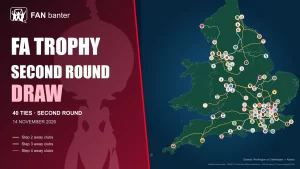
FA Trophy second-round draw: all 40 ties, away journeys and matches to watch
Read the story →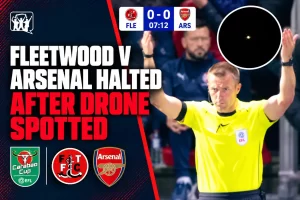
Drone stops Fleetwood Town vs Arsenal Carabao Cup tie at Highbury
Read the story →
Next Sheffield Wednesday manager odds: contenders to replace Henrik Pedersen
Read the story →






You must be logged in to post a comment Login