Eni Aluko reveals she lost out on work during her case against Joey Barton, who has been found guilty of sending “grossly offensive” posts.
Broadcasters Eni Aluko, Lucy Ward and Jeremy Vine won a legal victory when former footballer Joey Barton was found guilty of six counts of sending “grossly offensive” social media posts.
Aluko told Sky News she was “stunned and devastated” when she saw the messages from the ex-England player, and that after the posts she didn’t leave her house for a week.
During the trial, Barton argued he was the victim of a “political prosecution” and that his comments aimed at Aluko and Ward were simply “dark and stupid humour”.
But jurors at Liverpool Crown Court found his comments had “crossed the line between free speech and a crime”.
‘Broadcasters need to take a stronger stance on this.’
Eni Aluko reveals she lost out on work during her case against Joey Barton. pic.twitter.com/hcpvBXHmlx
— LBC (@LBC) November 10, 2025
Eni Aluko says she has done the least punditry since 2014 over the 2-year case, and believes being labelled “controversial” due to sexism/misogyny/racism issues has deterred broadcasters from taking her on.
She was stunned by Barton’s sudden “onslaught” comparing her to serial killers (Fred & Rose West, Stalin, Pol Pot); previously positive interactions.
And it took a personal toll on her, saying she didn’t leave house for a week, left the country, and felt paranoid about physical and death threats, with online abuse amplified by smaller accounts.
Moving Forward, Eni is prioritising safe, respectful spaces, is working with Ofcom and Kick It Out to combat racism/sexism in football, but calls for stronger broadcaster stance to protect talent.
She said while on LBC: “I’ve done the least amount of work that I’ve ever done during this two year period of this litigation.
“And, you know, I’ve been fortunate to be a regular pundit and broadcaster since 2014. you know, and I don’t think that’s a coincidence.
“I do think there is a sense of, know, you get labeled as controversial, you know, by certain sort of sections of football broadcasting.
“And you know, I think there’s a reticence to try and deal with the issues at hand which you know, unfortunately are you know sexism, know racism in my case misogyny and so, you know, I’ve been quite open about saying, forget whether I’m gonna continue or not think moving forward if this happens again, you want to see a stronger stance from broadcasters to say and consistently say
“This is not acceptable. We have to make sure our talent feels safe and protected in doing their job.”
Eni Aluko said per Sky News: “I was really shocked. Gerry Barton is someone who I’ve only ever had, prior to January 2024, had positive interactions with, that he initiated.
“You know, he was very positive about my career, very positive about big moments in my career, moving to Juventus, you know, playing for England.
“So four years later to have, you know, this just kind of onslaught of posts comparing me to serial killers and murderers, Fred and Rose West and Stalin and Pol Pot and just the most extreme things, putting my head on their bodies. And I was stunned and devastated, really, just didn’t understand.
“And I think the problem is always the amplification of that.You know, that starts with one person and it becomes millions of people then thinking it’s OK to say similar things.
“You know, throughout the last two years, you know, we’ve had to get in touch with much smaller accounts.
“And when I say we, my lawyers, you know, there’s one lad that posted that I should be shot.
“You know, this is where it starts to get really dangerous because people think they can just say what they want because a bigger account has emboldened them to do so.”
Joey Barton is found GUILTY of six charges in ‘offensive tweets’ trial as details emergeTranscribed with the help of TurboScribe!
Interviewer: “So what effect did that have on you personally and professionally when you’re reading messages like that? How did it manifest itself in terms of day-to-day life?”
Eni: “Yeah, I mean, I was devastated. It came out of the blue, as I said, and I was just doing my job. It didn’t really make sense.
“That first week, you know, it kind of debilitated. I was very sort of crippled, you know, didn’t really feel like I could do anything.
“You know, after I reported it to the police, I then left the country because I just couldn’t really cope being in this sort of fishbowl type of, you know, experience where you feel like everybody’s talking about you.
“You start getting very paranoid about, you know, that leading into physical violence or somebody, you know, accosting you on the street and knowing what’s been said. This is the thing with online abuse.
“There’s an invisibility to it that feels very uncomfortable.
“You know, if you say something to me on the street, I know who I’m dealing with.
“With online abuse, it’s this kind of wave that you just, you don’t know where you’re, you know, where the people who are saying these horrific things about you are.
“They could be next door, they could be down the road. And that is a really, really horrible feeling. I think people sometimes like to minimise the impact of words, but it’s bullying.
“You know, it’s the same feeling, you know, if anyone’s getting bullied in school or at the workplace, it has a really damaging impact and it’s no different when it’s online.”
Interviewer: “Especially, and I’m quoting now, when you hear you’re only there to tick boxes, you know, when you’ve worked so hard playing for England, getting to the top in the world of punditry, and then to be told that.”
Eni: “Well, that’s just racism, isn’t it? It’s just pure racism. Because, you know, I think when you get reduced to just the colour of your skin, despite all the things I’ve done, despite the hard work that I’ve put in, to some extent, you know, I’ve had to go through some really difficult things to get to where I’m at.
“So, you know, that’s just, you know, in my view, pure racism. And I’m delighted that the jury have said that crosses the line.
“Because to my earlier point, I’ve seen that over and over again. You’re just a tick box. You’re a DEI hire.
“And it’s just been amplified over and over again to the point it’s been normalised as a slur. So I’m glad that that’s now been criminally said. That’s, you know, that’s too much.
Interviewer: “Well, I was going to ask you about that because it’s an interesting point, isn’t it? We know that free speech is under attack in this country. But as you say, the prosecution made it very clear that there is a line.”
Eni: Oh, yeah, absolutely.And I think that line needs to be clear. That line’s been blurred because social media platforms, unfortunately, like X, aren’t going to do anything about this kind of speech, this kind of conduct. And so people generally live in this vacuum where they think they can say whatever they like.
“So I’m very I’m a big fan of clear lines. I’m a big fan of, you know, knowing exactly where, you know, how much you can say, because we all have to regulate our speech in a civilised society. You cannot just say what you want. And I don’t think we’ve ever been able to.
“There’s defamation laws, there’s harassment laws, there’s criminal laws that say you cannot just say what you want about somebody else and harass them.
“So I hope that this case is a big, big objective of mine is to show there’s consequences to this conduct.
“And I hope that this case shows that actually what the line is. So people self-regulate, to be honest, and realise that freedom of speech, absolutely fine. I believe in it myself.But there is always a line and it does come with consequences if you cross that line.”
Interviewer: “And you gave evidence. How hard was that?”
Eni: “It was intense. It was really it’s kind of an out-of-body experience, you know, that I don’t particularly want to do again.
“Obviously, you’ve got a jury there, you’ve got the judge there, you’ve got Barton there. But, you know, in some way, I felt quite I felt quite empowered.
“I think there’s something to be said for standing up to bullies, you know, and whether it’s, you know, a young kid that’s getting bullied at school or a woman on broadcasting or Jeremy Vine, who’s, you know, leading broadcaster in this country. It has the same impact bullying, but you’ve got to stand up to it.”
Interviewer: “How do you feel about the bully now?”
Eni: “Well, we’ve defeated him.You know, there’s, you know, I’m sure he regrets what he’s done. And and that’s that’s all you can ask for. You ask for consequence, deterrence and, you know, some some deep thinking, I think, from Joey Barton as to as to his conduct moving forward.”
Interviewer: “How did you feel when the verdict came?”
Eni: “Relief, relief. You know, I’m a big fan of the justice system in the UK. I think it’s one of the things that makes the UK such a robust and strong country.
“But I’d like for it to be a bit quicker. It takes a while. You know, it’s been two coming up to two years.
“But I’m very, very grateful to the police, to obviously the jury that sort of made a decision that was fair and just in my view.
“And, you know, hopefully moving forward, I’ll be able to, you know, not have to deal with this kind of conduct again.”
Interviewer: “Yeah. I mean, moving forward, how are you going to do that? What are your next steps now? This is behind you.”
Eni: “Well, I think I think it’s really important for me to always prioritise being in spaces that I feel protected and I feel respected.
“Obviously, as visible broadcasters, as a public figure, you are going to get people who just don’t think you’re very good and and, you know, have an opinion on you. That’s absolutely fine. That’s always been the case.
“But I think more generally, you know, I want to be in environments where I thrive.I want to be in an environment where there’s a culture where, you know, for me as a black woman, I feel protected. So I think that’s really important moving forward.
“And, you know, I’m always open to working with this Ofcom or government. You know, Kick It Out. I speak to those guys a lot who deal with a lot of the sort of increasing racism and sexism in football.
“You know, I’m passionate about that work and I’m committed to that work so that not just me, other people also benefit from making sure that this culture doesn’t impact, this sort of awful culture doesn’t impact them.”
What fans are reading
Popular stories published in the past 48 hours.
Storm Boelo football postponements tracker: games off and pitch inspections
Read the story →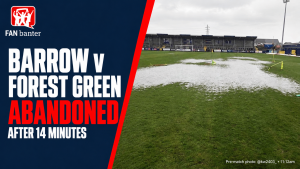
Barrow v Forest Green abandoned after 14 minutes despite hourly pitch inspections
Read the story →
Sky Sports Championship score predictions: Andy Hinchcliffe’s weekend picks
Read the story →
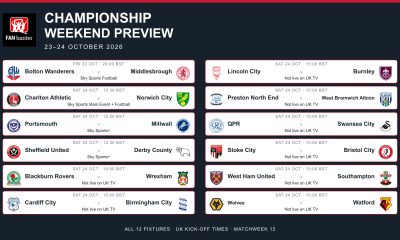
Championship weekend preview: team news, TV, form and all 12 fixtures
Read the story →





You must be logged in to post a comment Login