Former footballer turned manager Charlie Adam opens up on his mental health struggles after his Dad took his own life.
The 38 year old spoke to Juliette Ferrington on World Mental Health Day on the stigma around mental health and explaining why speaking out within a professional football setting is a strength.
His father died on the 17th of December 2012, aged 50, with the cause of death was publicly revealed as suicide in 2015.
Adam’s mother, Eleanor, also fell ill with cancer, with this being a reason as to why he went back to Scotland. She died in December 2020.
Adam has four other siblings, Gary, Connor and Grant, and sister Nicola.
It’s okay not to be okay, as @Charlie26Adam discussed with @juliette_grace. ❤️
Make sure to check in with your friends, family and colleagues, you never know how much of a difference you can make.#WorldMentalHealthDay | @EFL pic.twitter.com/XxRkrriudn
— Fleetwood Town FC (@ftfc) October 10, 2024
Interviewer Juliette Ferrington: “Charlie, Just going back to when we spoke before, a long, long time ago, you just lost your father and he taken his own life. Can you go back to that time and articulate how you felt? ”
Charlie: “Yeah, listen, I was playing in the Premier League. I just signed for Stoke six months previously, and ultimately I felt everything was okay and playing wise, so obviously I just made the move.
“But family life was good. Mum and Dad were living in Scotland with my brothers and sisters. Obviously, they’re a bit older and yeah, it was a complete shock to me when I got the call, and I still visual it quite a lot. That I was sat in a car park when I got the call, just picking up some dinner, and my brother called me.
“But it wasn’t unusual because it was Christmas time. And for us as a family, it was a big thing for us at Christmas as a family, because, you know, five kids, we made a big thing of it. And Dad used to always. Even right up to the end, it didn’t matter what age we are, he’d always never tell us what he’d buy us for Christmas. And it was always a secret. So for him to be in the room, wrapping presents, locking the door or blocking the door, that was normal. So there was no incline of what we thought.
“It was only probably about 45 minutes later when my brother tried to go in after the first time that obviously when he went in the room, he found them and it was, yeah, listen, it’s obviously devastating when you get that, but when you have somebody who’s such a big figure in your life as a family member, but also as your Dad, it was hard to take because people that know my dad as a big, outgoing, bubbly person, but deep down, really, you know, he was struggling.
“And unfortunately, when things like that happen and there’s no. No issue, no nothing left or anything like that, then it’s hard to really figure out why and what reason. So you have to come to terms with that over the years. And as that happens, I’ve managed to do that.
“But, yeah, at the time, it was extremely hard. It was a huge focus then on obviously playing in the Premier League, and playing football was probably my escape, really. My mind was Just all over the place. I was trying to play. I was trying to be a husband, I was trying to be a brother, I was trying to be the connection, because I was the oldest boy, it was like everything was coming to me and everybody was asking me why and what, and I found it hard.
“And ultimately, eventually, probably two months, three months, maybe even two years later, I was in a tough place off the pitch.
“The physio, Dave Watson at the club at Stoke at the time was unbelievable. He managed to get a psychologist to come into the training room and speak to me a couple of times and cleared a few things and ultimately that sort of helped me and gave me a pathway then to get back to playing.
“But it was tough at the time. Yeah, absolutely. Things have gone on in my life and my journey that people don’t know, and that’s why I’m here, that I want to be able to speak about it and help players or people that are struggling, because it’s important that we do speak out.
“And like I said now before, everybody said if you spoke out, it would be a sign of weakness. Now it’s a sign of strength for people within the game. And, you know, we’re in a very fortunate position now as the manager of a football club and been through that experience, definitely taking that into my management.”
Interviewer: “Do you make a conscious effort not to berate too much?”
Charlie: “No, I think there’s a time and there’s a place and there’s a moment, and again you have to. Because we have a level, we have a standards, and if you drop down past that standard, then ultimately as a manager, you’re frustrated.
“But there’s a way of doing it. It’s how we explain it after it, why and what reasons, and showing the lads how we can improve and get better.
“The whole package of everything of a football player now is different. And it’s not Just about coming up training, you know, driving in your car, having lunch and going home. There’s a lot more to it and how the person is, how they’re feeling, what they’re at, what problems they’ve got at home. And some players don’t want to talk about it.
“So it’s now just trying to get them one on one. And I talk about, as a young coach now, it’s about trust, trusting me as the coach.
“Maybe one of my coaching staff has a better connection with them than possibly me. And maybe it’s just how he can come across with it. Maybe he’s had that situation in his life. This coaching staff, physio, you know, we use all of our staff in different ways to try and get the best at the place on a daily basis.
“Having lunch, just walking across the pitch, you maybe get a better conversation than you do, just sat in the office, where you’re in the manager’s office, it becomes more of a formal chat. Than just a normal chat like this. It’s relaxed, it’s calm. And maybe you get more out of it than just that moment in an office.”
Interviewer: “And I guess for you yourself, you’re always learning as well, aren’t you? You’re always educating yourself.”
Charlie: “Every day. How do I get better every day as a person, as a manager? Every situation. I write in a black book that I have everything that goes on, what I think, what I see, I write it down because my mind is not the best.
“So I like to look back and think, how did I deal with that situation? Or how did I deal with that, Just In case it comes up again, that I’ve got a thought and a process that I sort of walked through with that as a manager, we’ll all have been weak at some point.
“And it’s how you have that support around you and in their moments, that’s when you become stronger and you become better and you learn from what you’re doing on a daily basis.”
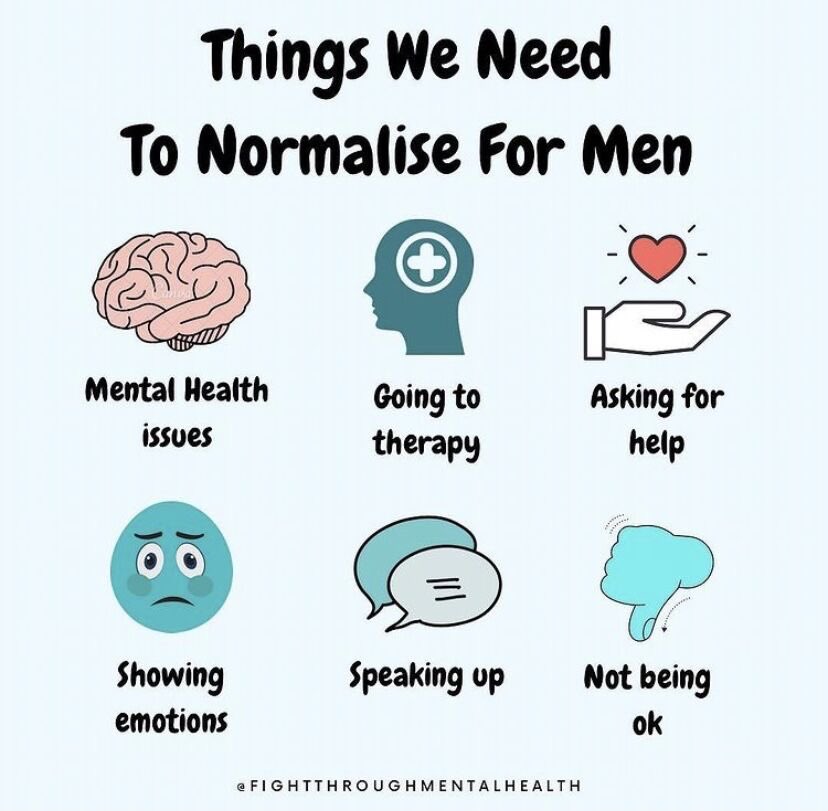
MENTAL HEALTH – DEPRESSION HELPLINES
NHS – Mental Health
Comprehensive help and information from NHS with links to external help and support.
NHS INFORM (Scotland)
The site is designed to offer information, advice to those experiencing troublesome thoughts, feelings and actions. From the site you are able to print off various self-help guides covering conditions such as depression, anxiety, stress, panic and sleep problems.
Royal College of Psychiatrists
Anxiety, panic attacks & trauma
This leaflet is for anyone who is, or has been depressed. We hope it will also be helpful for friends and relatives. It describes what depression feels like, some of the help that is available, how you can help yourself and how to help someone else who is depressed. It also mentions some of the things we don’t know about depression. At the end of the leaflet there is a list of other places where you can get further information.
Mind
MindInfoline: 0300 123 3393
Side by side – on-line support community
The MindinfoLine offers thousands of callers confidential help on a range of mental health issues. Mind helps people take control of their mental health. We do this by providing high-quality information and advice, and campaigning to promote and protect good mental health for everyone. They also provide a special legal service to the public, lawyers and mental health workers.
Shout
Text Shout to 85258
Shout is the UK’s first free 24/7 text service for anyone in crisis anytime, anywhere. It’s a place to go if you’re struggling to cope and you need immediate help.
Breathing Space (Scotland)
Helpline: 0800 83 85 87
Sometimes our thoughts and feelings can overwhelm us. It helps to get some Breathing Space. Pick up the phone – we’re here to listen. We are a free, confidential, phone service for anyone in Scotland over the age of 16 experiencing low mood, depression or anxiety.
SAMH (Scottish Association for Mental Health)
SAMH Information Team: 0344 800 0550
Today, in over 60 communities we work with adults and young people providing mental health social care support, services in primary care, schools and further education, among others. These services together with our national programme work in See Me, respectme, suicide prevention and active living; inform our policy and campaign work to influence positive social change.
Trauma Research UK
We are a national registered trauma research charity dedicated to making a difference. Offering support and recovery programmes to those suffering from trauma and anxiety-related disorders such as phobias, panic attacks, PTSD, OCD, GAD etc. We know you may be suffering right now, but please consider this – “It’s not what’s wrong with you, it’s what happened to you”.
Hub of Hope
The Hub of Hope is the UK’s leading mental health support database. It brings local, national, peer, community, charity, private and NHS mental health support and services together in one place. We want to ensure that all of us – no matter what we are experiencing, or how we see and understand our experiences – feel welcome on the Hub of Hope.
Be Mindful
Mindfulness can give people more insight into their emotions, boost their attention and concentration and improve relationships. It’s proven to help with stress, anxiety, depression and addictive behaviours, and can even have a positive effect on physical problems like hypertension, heart disease and chronic pain.
ChildLine
Helpline: 0800 11 11
ChildLine is a counselling service for children and young people. You can contact ChildLine in these ways: You can phone on 0800 1111, send us an email, have a 1-2-1 chat with us, send a message to Ask Sam and you can post messages to the ChildLine message boards. You can contact ChildLine about anything – no problem is too big or too small. If you are feeling scared or out of control or just want to talk to someone you can contact ChildLine.
Young Minds Helpline: 0808 802 5544 www.youngminds.org.uk Parents’ Information Service gives advice to parents or carers who may be concerned about the mental health or emotional wellbeing of a child or young person.
Kooth.com
Kooth.com is an online counselling service and online mental health community that provides vulnerable young people, between the ages of 11 and 25, with advice and support for emotional or mental health problems. Kooth.com offers users a free, confidential, safe and anonymous way to access help.
The Mix
Helpline: 0808 808 4994
Life’s tough, we know that. It can throw a lot your way and make it hard to know what the hell to do with it all. So, welcome to The Mix. Whether you’re 13, 25, or any age in between, we’re here to take on the embarrassing problems, weird questions, and please-don’t-make-me-say-it-out-loud thoughts you have. We give you the information and support you need to deal with it all. Because you can. Because you’re awesome.
Papyrus HOPELINEUK – 0800 068 4141 www.papyrus-uk.org
Worried about someone… Support for anyone under 35 experiencing thoughts of suicide, or anyone concerned that a young person may be experiencing thoughts of suicide.
stem4
stem4 is a charity that promotes positive mental health in teenagers and those who support them including their families and carers, education professionals, as well as school nurses and GPs through the provision of mental health education, resilience strategies and early intervention. This is primarily provided digitally through our innovative education programme, pioneering mental health apps, clinically-informed website and mental health conferences that contribute to helping young people and those around them flourish.
Students Against Depression www.studentdepression.org Developed in consultation with students who have been affected by depression, low mood or suicidal thoughts. Many of their stories and suggestions are included on the site.
Campaign Against Living Miserably Helpline: 0800 58 58 58 www.thecalmzone.net The Campaign Against Living Miserably (CALM) works to prevent male suicide and offers support services for any man who is struggling or in crisis. CALM’s helpline 0800 58 58 58 and web-chat are for men in the UK who need to talk or find information and support. The services are open 5pm–midnight daily and are free, anonymous and confidential. For access or to find more information visit thecalmzone.net
SOS Silence of Suicide
For support call: 0808 115 1505 (8pm to midnight M-F. 4 to midnight Sat/Sun)
We support everyone affected by suicide, whether they be bereaved, having thoughts of suicide, or have attempted suicide. No one should feel awkward. No one should feel isolated, we will continue to support everyone and anyone who needs our help.
Samaritans Tel: 116 123 (Free)
www.samaritans.org Whatever you’re going through, we’re here to help 24 hours a day. We won’t judge you and we won’t share what you tell us with anyone else. Get in touch by telephone, email, letter and face to face in the UK and Ireland. Visit befrienders.org if you live outside the UK or Ireland.
What fans are reading
Popular stories published in the past 48 hours.

Football matches live on TV this week
Read the story →
FA Trophy second-round draw: all 40 ties, away journeys and matches to watch
Read the story →
Drone stops Fleetwood Town vs Arsenal Carabao Cup tie at Highbury
Read the story →
Next Sheffield Wednesday manager odds: contenders to replace Henrik Pedersen
Read the story →








You must be logged in to post a comment Login